



UNDERSTANDING MERGER AND ACQUISITION: KENYA
(Merger & Acquisition series: 1)
In Kenya the Competition Authority of Kenya (CAK) is mandated to regulate market structure to ensure fair competition and protect consumers in the market by enforcing and controlling Mergers & Acquisition and control unwarranted concentration of Economic Power to address potential market imbalances. Specifically, CAK assesses merger notifications to determine their impact on competition and area of public interest, approving transactions with or without conditions or rejecting them as necessary. The Authority also investigates mergers implemented without the Authority’s approval and imposes appropriate sanctions.
When it comes to Merger and Acquisition, an applicant is required to furnish the Authority either of the below two notifications:
- Merger Notification; or
- Exclusions.
A merger refers to the acquisition of shares, business or other assets whether inside or outside Kenya resulting in change of control of a business, part of business or an asset of a business in any manner and includes a takeover.
An exclusion refers to mergers which do not meet the required merger threshold for mandatory notification as contained in the Merger Threshold Guidelines.
The table below outline the characteristics of the merger and the information to be submitted to the Authority:
| Characteristics of the merger | Schedules to be submitted |
| Firms applying for exclusion | Schedule I (only questions 1-26) and Schedule IV |
| Merger at or above the prescribed thresholds and where the merging parties do not operate in the same line of business and/or no vertical relationships among merging parties exists. | Schedules I & IV |
| Merger at or above the prescribed thresholds; and the merging parties operate in the same line of business or there are vertical relationships among merging parties. | Schedules I, II & IV |
| Merger at or above the prescribed thresholds and where merging parties operate in the same line of business or there are vertical relationships among merging parties; and/or there is a high likelihood that combined market share of merging parties falls above 35% in one or more markets and/or one or more of the parties are dominant in at least one market. | Schedules I, II, III &IV |
The Applicant is also required to provide the following information when submitting a merger application:
- A signed copy of Sale and Purchase Agreement;
- Audited Financial Statements for the last three years duly signed by the Board of Directors and Certified Public Accountant Member;
- The latest Annual Reports, Board resolutions and related documents regarding the merger;
- Copies of Certificates of Incorporation/Registration Certificates or equivalent and similar documents including other shareholder companies where there is chain ownership;
- A breakdown of employees, and plans to realize cost savings, efficiencies and plans documenting investment evaluations;
- The name and principal business address of the undertaking filing the notification;
- Details including Name, Position, Address, Telephone and Email of the contact person of the undertaking filing the notice;
- Name, Position, Address, Telephone and Email of the authorized representative;
- Names and principal business address of all the undertakings directly or indirectly controlling the applicant/parties;
- Names and business address of the shareholders directly or indirectly controlling the applicant/parties;
- Detailed organizational structure for both the acquiring and the target undertaking;
- Brief history of the firms including the date of incorporation;
- Names of the directors of the acquiring undertaking and their nationalities (attach a copy of current CR/12) or equivalent issued within the last 2 months;
- Names of the directors of the target undertaking and their nationalities (attach a copy of current CR/12) or equivalent issued within the last 2 months;
- List all the undertakings where the directors of the acquiring and target undertaking serve as directors and or shareholders;
- Indicate previous merger applications involving the acquiring and target undertaking, or their affiliates, if any;
- Indicate the nature of transaction of the previous transaction and the sector or market affected;
- Indicate the industry sector or sectors involved;
- Main activities of the target and acquiring undertaking;
- Areas where you sell your products or provide services and a List the products that you sell and/or services that you provide;
- Annual turnover in Kenya for the preceding year;
- If the parties have no operations in Kenya, provide the global turnover or assets and countries of operation;
- Value of your assets for the preceding year;
- The monetary value of the consideration being offered;
- Type of transaction (e.g. whether it is an acquisition or sale of assets, acquisition or sale of shares, acquisition of minority shareholding giving material control, amalgamation, etc.);
- Information on whether the transaction been notified to other regulatory authorities;
- The ownership structure and control before and after the transaction;
- The business rationale for the transaction including strategic, commercial and economic reasons;
- Information on the market participants in the market and the number of entrants and exits in the market over the last five years;
- An assessment of the likely impact of the merger on Employment (if the transaction is likely to result in employment loss, indicate the number, type (skilled or unskilled) of jobs to be lost and the justification for the loss), Ability of merging parties to compete in international markets, and Ability of SMEs directly affected by the merger to gain access to or to be competitive in any market;
- If the transaction is likely to generate efficiencies;
- Information on whether one of the parties is a failing firm;
- Documents prepared for the Board of Directors, regulatory bodies in relation to the transaction;
- Reports, surveys, analysis or other documents assessing the transaction with respect to its impact on competition; and Latest business plans, marketing plans, sales report and strategic plan;
- Estimates of your market shares and those of your competitors;
- Identify your main actual and potential suppliers, for each product/service grouping (including the other merging party where applicable).
- Identify your main actual and potential customers, for each product/service grouping (including the other merging party where applicable).
- Explain the nature of the vertical relationship and how it is likely to affect competition in the upstream and downstream markets;
- Sales volumes, monthly over previous three years for main products, by area;
- List of your top five customers and their contact details in each of the markets you operate and the percentage sales shares accounted for by each of them, nationally and by region;
- List of your top five suppliers and their contact details in each of the markets you operate and the percentage sales shares accounted for by each of them, nationally and by region;
- Contractual agreements with suppliers and customers;
- Identify entry and exit barriers into the markets likely to be affected by the transaction; and
- Any other information as the Authority my require.
In our next insight (merger and acquisition series 2), we will discuss the procedure for filing a merger application, timeline and costs.
For more information, please contact us on info@aowangaadvocates.com or +254794600191
All rights reserved for A.O. WANGA ADVOCATES
www.aowangaadvocates.com

REVIEW OF THE SOCIAL HEALTH INSURANCE ACT, 2023
On the 21st November 2023, the Kenya’s Cabinet Secretary for Health via legal notice number 194 ga
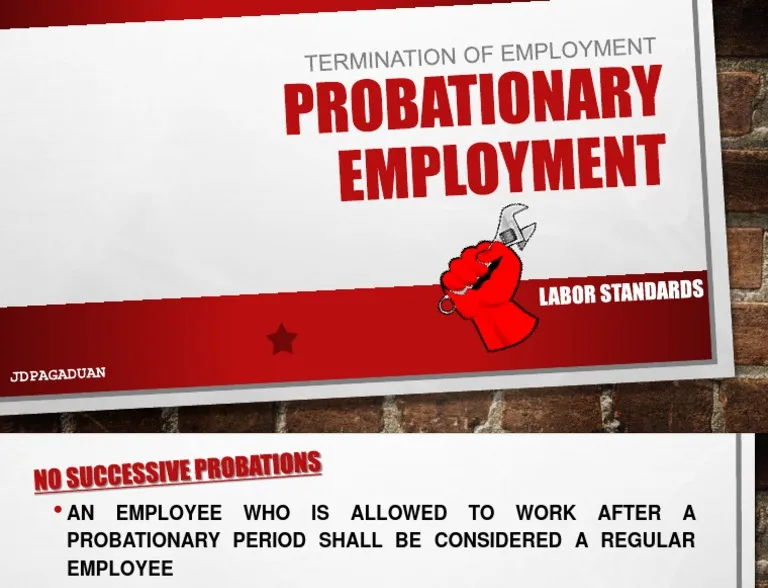
What you need to know about probationary contracts in Kenya
The Employment Act, 2007 defines a probationary contract as a contract of employment which is of not

FOREIGNERS SETTING UP OR MOVING TO KENYA TO WORK
Following the amendments to the Companies Act, 2015 foreigners intending to set up businesses in Ken
James Kibet
Thanks for this amazing thoughts about commercial law. Bravo 👏